
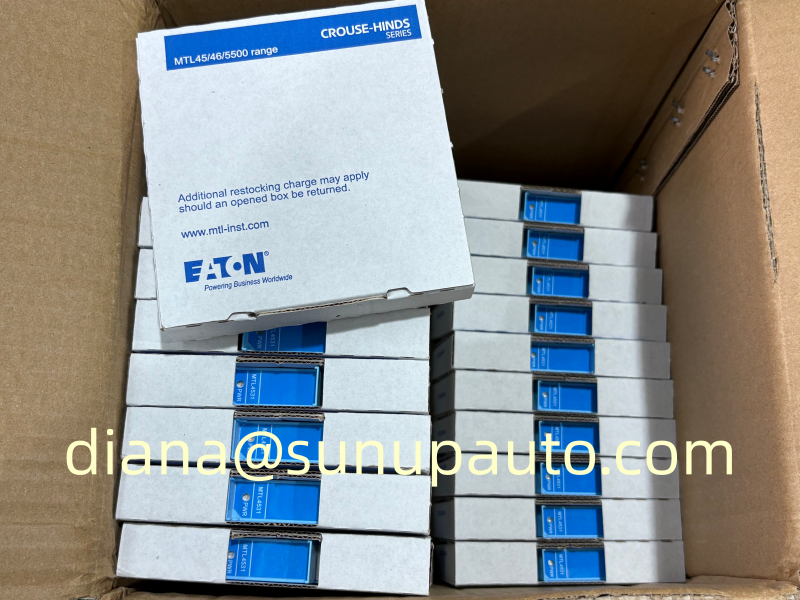
MTL 9377 Fieldbus Barrier Family for Intrinsically Safe Spur Distribution
MTL 9377 is commonly used as a search term for the Eaton MTL 9377-FB3 and related 9377 fieldbus barrier configurations. These compact assemblies provide twelve intrinsically safe spur connections for FOUNDATION Fieldbus H1 networks, allowing a fieldbus trunk in a Zone 1 location to serve certified field instruments in Zone 0 when the complete system is correctly engineered.
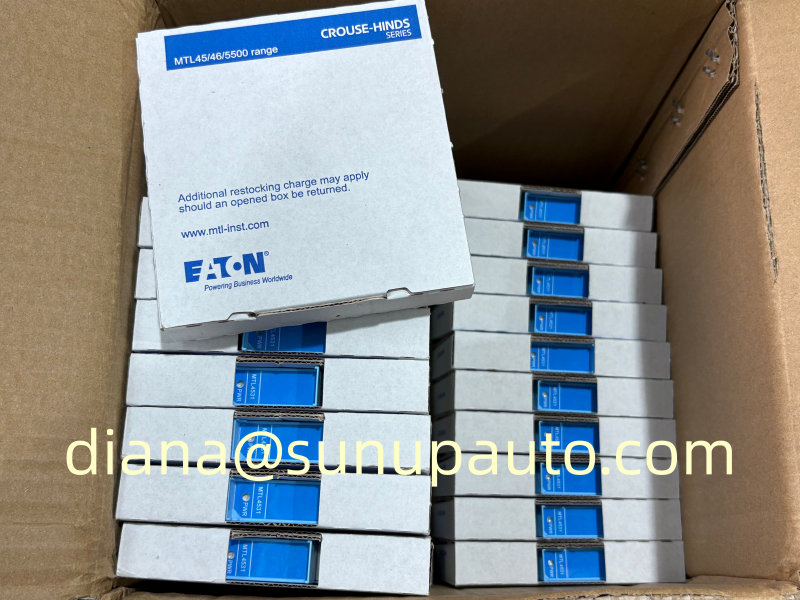
The Full 9377 Suffix Matters
MTL 9377 is a family reference rather than a complete ordering code. The installed label may include identifiers such as 9377-FB3 or 9377-FB-R, together with certification and connection details. Procurement teams should therefore avoid selecting a replacement from the family name alone. A label photograph, cabinet drawing, spur count, trunk arrangement, and required surge protection option should be reviewed before a quotation is finalized.
Key confirmation points: exact suffix; existing trunk and spur connectors; mounting method; hazardous-area classification; FISCO or Entity system concept; certificate edition; ambient conditions; and whether integrated surge protection is required.
Typical Project Role
A 9377 barrier can form a structured connection point between the fieldbus trunk and multiple hazardous-area instruments. The twelve-spur layout can reduce enclosure size and simplify cable organization in process plants with many transmitters, valve positioners, or analyzers. DIN-rail and panel-fixing options support different junction-box and cabinet designs, while compatibility with FISCO and Entity-certified instruments gives engineers flexibility when the complete loop is assessed against the applicable documentation.
Common demand comes from oil and gas facilities, refineries, chemical plants, offshore packages, power generation, water treatment, and other continuous-process sites. MTL 9377 may be requested for a new segment build, a damaged barrier replacement, a brownfield network extension, or strategic spare stock for an installed fieldbus system.
Information to Include With an Inquiry
Photograph the complete product label and terminal arrangement.
State the required quantity and delivery schedule.
Identify whether the item is for replacement, expansion, or a new project.
Provide the destination country and any certificate or document requirements.
Confirm whether related fieldbus power supplies, terminators, or surge devices are also needed.
Sunup-MTL can assist with exact-code checking and supply coordination for MTL 9377 family products. The final barrier selection, loop calculation, installation, and commissioning must follow the current Eaton instructions and the approved hazardous-area design.
Position of the 9377 Barrier in a Fieldbus Segment
A FOUNDATION Fieldbus H1 segment combines power and digital communication on the same pair of conductors. The trunk normally carries the segment supply and communication signal from the host-side equipment toward the field. At a hazardous-area distribution point, an MTL 9377 family barrier can divide that trunk into multiple protected spurs for individual instruments. The barrier limits the energy available to each spur according to the approved concept while allowing communication between the host and connected field devices.
This architecture can simplify junction-box design because twelve instruments may be organized through one compact barrier assembly. However, the available segment current, voltage drop, cable length, number of devices, terminator locations, and intrinsic-safety parameters still have to be calculated. The presence of an MTL 9377 does not remove the need for a complete segment design.
Spur Planning for Reliable Communication
Each spur should be identified by instrument tag and connected to the intended channel. Cable length, resistance, capacitance, shielding, and routing can affect communication quality. During design review, confirm that every instrument receives adequate operating voltage at the lowest expected trunk supply. Allow for cable losses and the electrical characteristics of the barrier rather than using only nominal values.
Unused spurs should be handled according to the current installation instructions. Trunk and spur screens need a deliberate grounding method that matches the project philosophy. Avoid accidental multiple earth points, poorly terminated screen conductors, and parallel routing beside noisy power cables. If optional surge protection is included in the selected 9377 configuration, its bonding path and maintenance requirements should also appear on the drawing.
FISCO and Entity Documentation
The 9377 family may be used with FISCO or Entity-certified equipment, but those approaches require different verification records. Under a FISCO design, all participating components and the cable must satisfy the relevant fieldbus system conditions. Under an Entity approach, the output parameters of the barrier must be compared with the input parameters of each field device, and the permitted cable capacitance and inductance must be confirmed. The certificate for the exact MTL 9377 suffix should be reviewed together with the instrument certificates and the area-classification drawing.
Gas group, equipment protection level, zone, ambient temperature, temperature class, and local approval requirements can change the acceptable configuration. Buyers should request the correct certificate edition for the destination project instead of relying on a generic family brochure.
Commissioning Sequence for a Twelve-Spur Barrier
- Verify the complete MTL 9377 suffix against the approved bill of materials.
- Inspect the enclosure, mounting, earth connection, trunk terminals, and all spur terminals.
- Confirm trunk polarity, supply voltage, terminator arrangement, and available segment current.
- Connect and test one spur at a time, recording the instrument tag and measured voltage.
- Check host communication, device identification, diagnostic status, and signal stability.
- Document unused channels, screen connections, label details, and final cable routing.
If communication is unstable, troubleshoot the segment methodically. Check supply voltage, termination, cable polarity, shield grounding, connector condition, excessive spur length, and duplicate device addresses before replacing the barrier. Diagnostic measurements should be taken with suitable fieldbus test equipment and by personnel familiar with hazardous-area procedures.
Replacement and Expansion Projects
For a replacement, photograph the existing MTL 9377 label, terminal layout, installed options, and enclosure arrangement. Record the active spur count and whether the project uses DIN-rail or panel mounting. For an expansion, provide the proposed device list, cable schedule, segment calculation, and area classification so the new load can be reviewed before hardware is ordered.
A purchasing inquiry should include the full suffix, quantity, destination country, required delivery date, certification requirement, and acceptable product condition. Related requirements may include fieldbus power supplies, terminators, connectors, surge protection, enclosure hardware, or spare plug assemblies. Sunup-MTL can coordinate the commercial supply of MTL 9377 family items, while final design approval and commissioning remain the responsibility of qualified project personnel.